

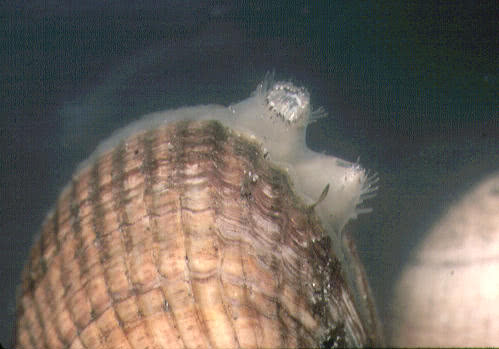
A cockle feeding, showing the two short siphons. The narrower one is the exhalent one and is narrow to shot the waste away from the animal.
The common cockle is a cream coloured rounded bivalve with a strongly ribbed shell. Its shell may reach 5cm in length and it inhabits a variety of soft shores with a salinity of more than 15%. The ribs of the shell interlock where the lips of the shell meet to protect it from predators. Cockles are shallow burrowers living just under the sediment surface from where they protrude their short siphons which they use to suspension feed. Because they lie so shallow in the sediment they are easily dislodged by storms and as such provide a substantial food supply for opportunistic fishes
Looking for a next step?
The FSC offers a range of publications, courses for schools and colleges and courses for adults, families and professionals that relate to the seashore environment. Why not find
out more about the FSC?

FEEDBACK
Do you have any questions?
Copyright © 2008 Field Studies Council

Creative Commons Attribution-Noncommercial-No Derivative Works 3.0 Licence .
Site Statistics by Opentracker